Showing posts with label feminism. Show all posts

Wednesday, August 12, 2015

WIP: Magic Lupine

magic magic4

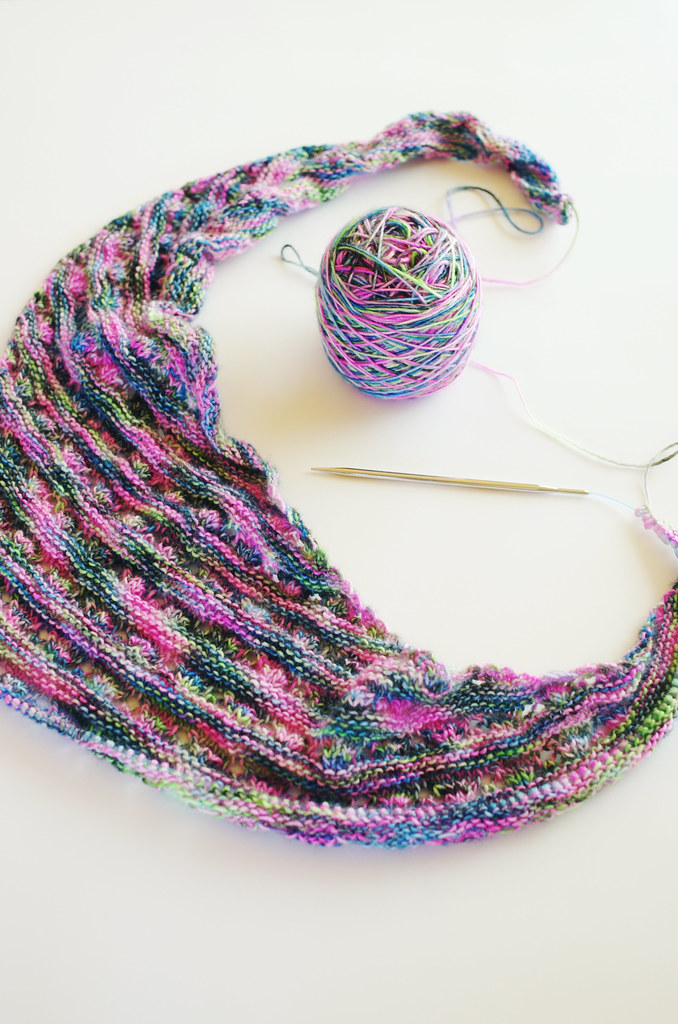
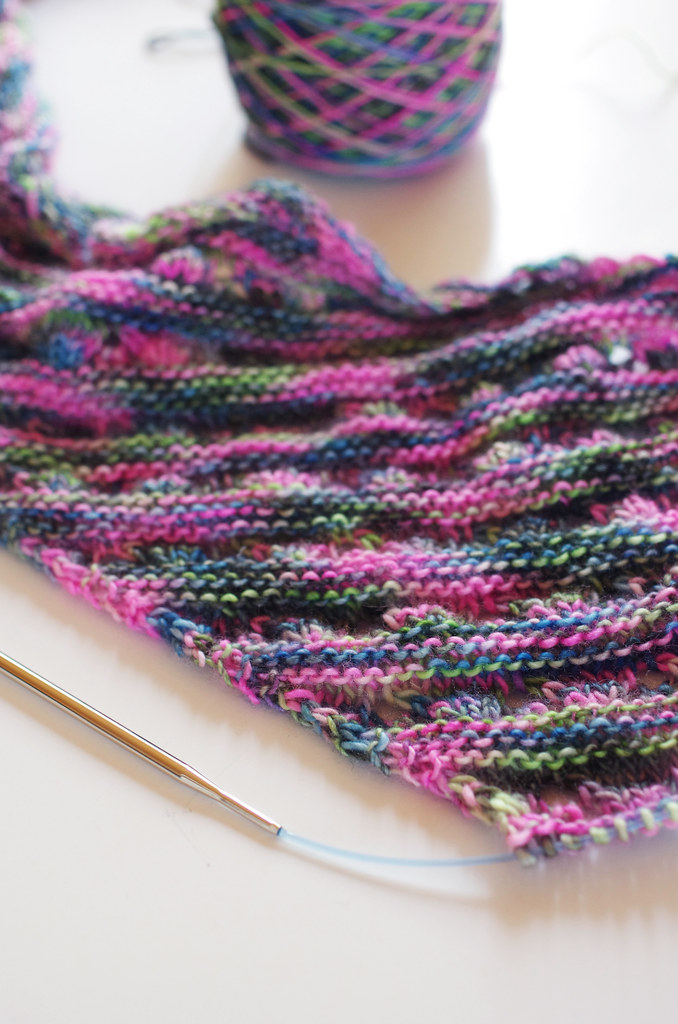
In between my secret projects, I've been knitting on a third Lupine shawl, this time in a coveted skein of Tosh Merino Light in the colorway Magic. Lately, I've been exploring more of the sparkly, Lisa-Frank-tastic style of my '90s youth, which means splatter-dyes and neon and everything funky - which has been fun, and also sort of complicated in weird ways.

I was a pretty serious kid, and even though I did have a sticker book to rival the best of them - I had sparkly, fuzzy, and scratch-n-sniff stickers, organized by type and motif in a Lisa Frank dolphin sticker book, thankyouverymuch - I didn't ever feel like I was cool enough to really participate in trends or fashion in general, so in a small way, I'm attempting to reclaim that experience a bit. (Okay, the current '90s throwback nostalgia is helping too!) It wasn't until I started going to fashion school that I admitted that I even cared about fashion, since my experience of it had been so fraught with feelings of exclusion and inadequacy - some of which was handed to me through media portrayals of beauty and worthiness, and some of which came from an internal sense of perfectionism and self-criticism. Either way, fashion was a very negative thing to me for much of my life, and I'm still sorting through a lot of my beliefs about and experiences of it.

So in my daily making & fashion life lately, I've been trying to explore and challenge those things that we all hear and internalize in childhood, which are reinforced over and over again throughout our lives: you have to be pretty to pull off short hair; being skinnier is always better; women can't have body hair, because it's gross; your hips look big in that dress, and nobody wants that, right? And what I'm finding is that I'm not just enjoying the opportunity to play with fashion and beauty that has felt off-limits to me in the past, I'm also finding that a lot of it feels authentic in ways I didn't expect, which is pretty fucking cool.

derpsquish derpsquish2

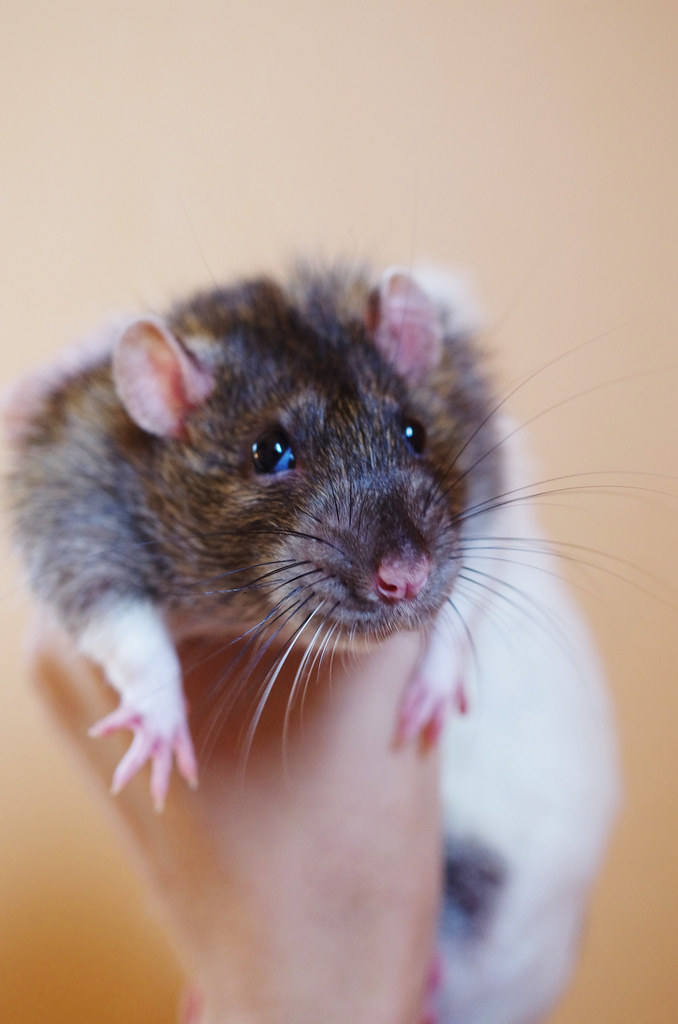
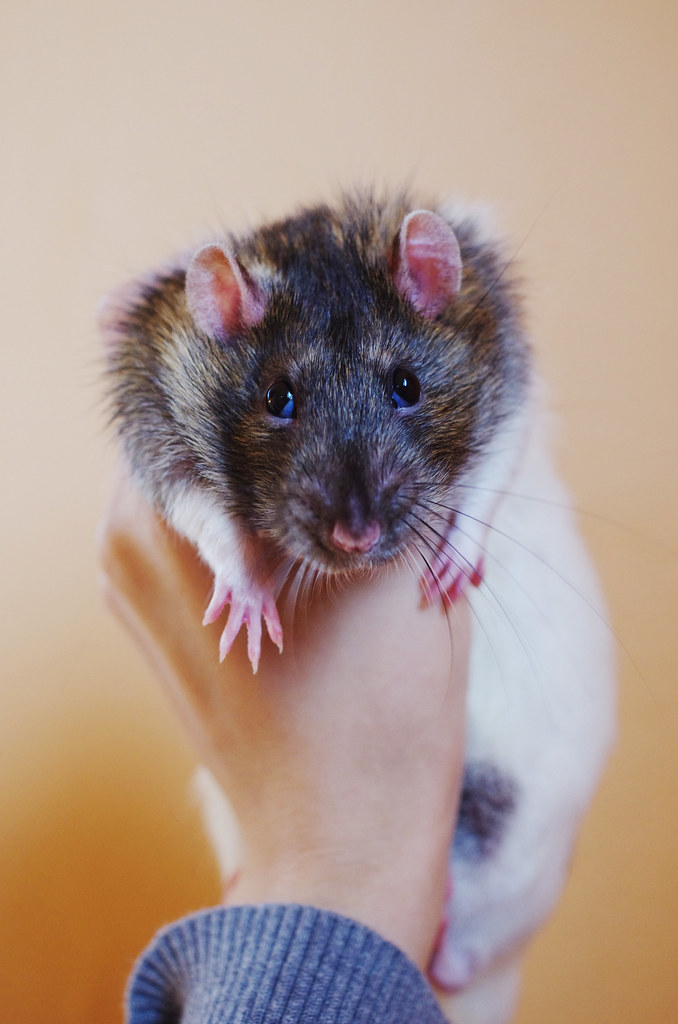
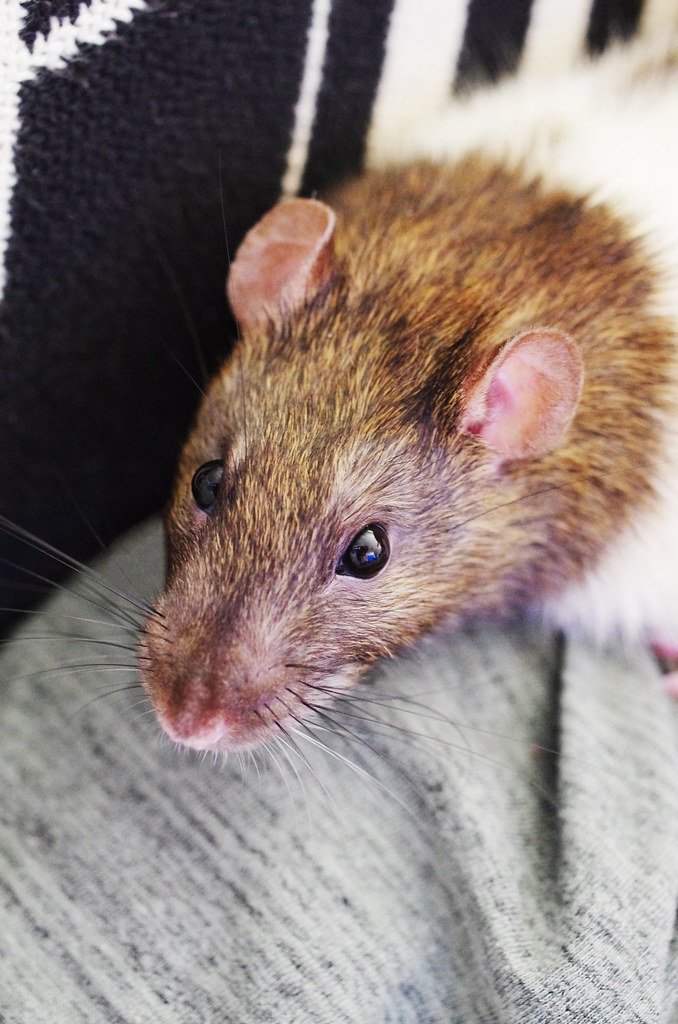
 In other news, Monsieur Squishy is still on a twice-daily dose of rattie antibiotics, but remains more or less his cranky self. He has become somewhat more personable during his convalescence, but I think his true opinion of us has changed only slightly: Lumberjack and I are still his annoying humans, but now we are his annoying humans who also give him tasty yogurt twice a day.

Good boy, I guess?

Happy Wednesday, friends!
<3
Cory

Thursday, July 3, 2014

It's Bra O'Clock, Friends!

NSFW Disclaimer: You're about to see an adult woman wearing only a bra and jeans. If you're at work, or if you or someone in the room with you is sensitive to nudity, please feel free to stop reading here.

squish

Additional disclaimer:

I briefly thought about cropping my face out of these photos, in the end I decided that I'm okay with looking awesome in a bra on the internet. Fashion has already cornered the market on depicting women's bodies as faceless objects of envy, sex, and scrutiny, and that practice severs the connection between the physical body and the experience, intellect, and emotional complexity of a living, breathing person. As others more eloquent than I have argued, when you view a whole person as a collection of body parts, it makes violence against them that much easier.

So, in short: if my boobs are going to be on the internet, I'd rather that my noggin was directly associated with them.

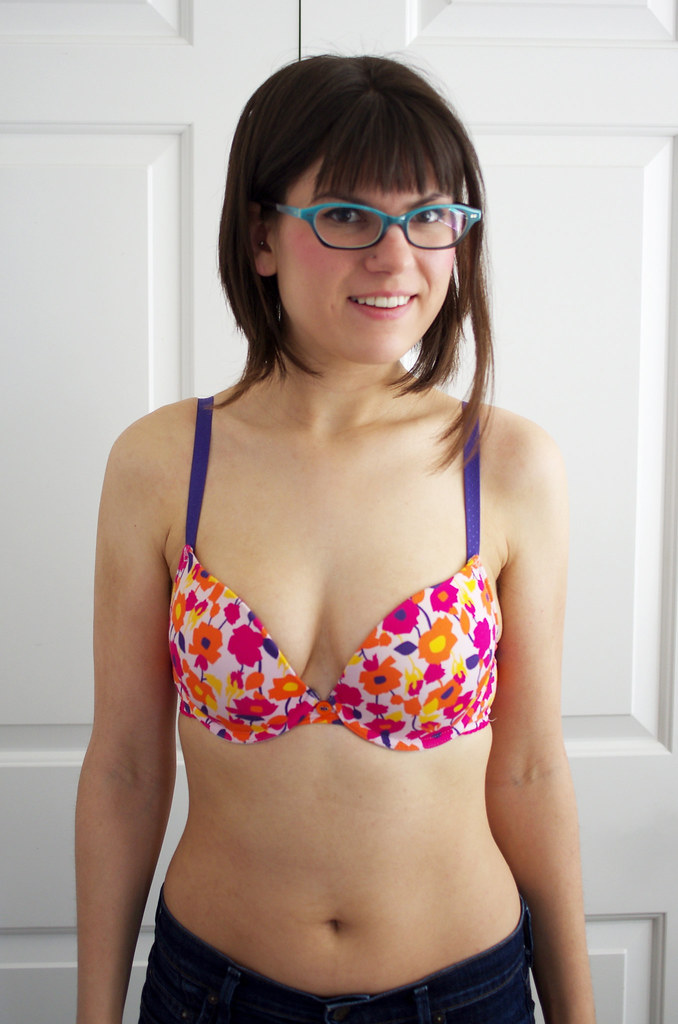
bra2 bra

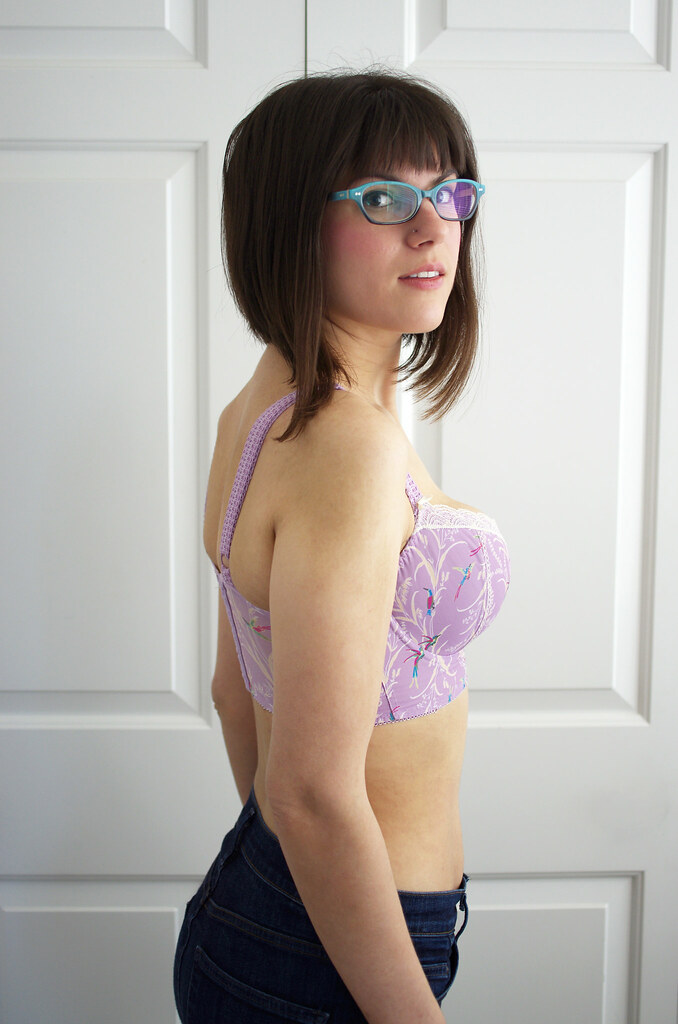
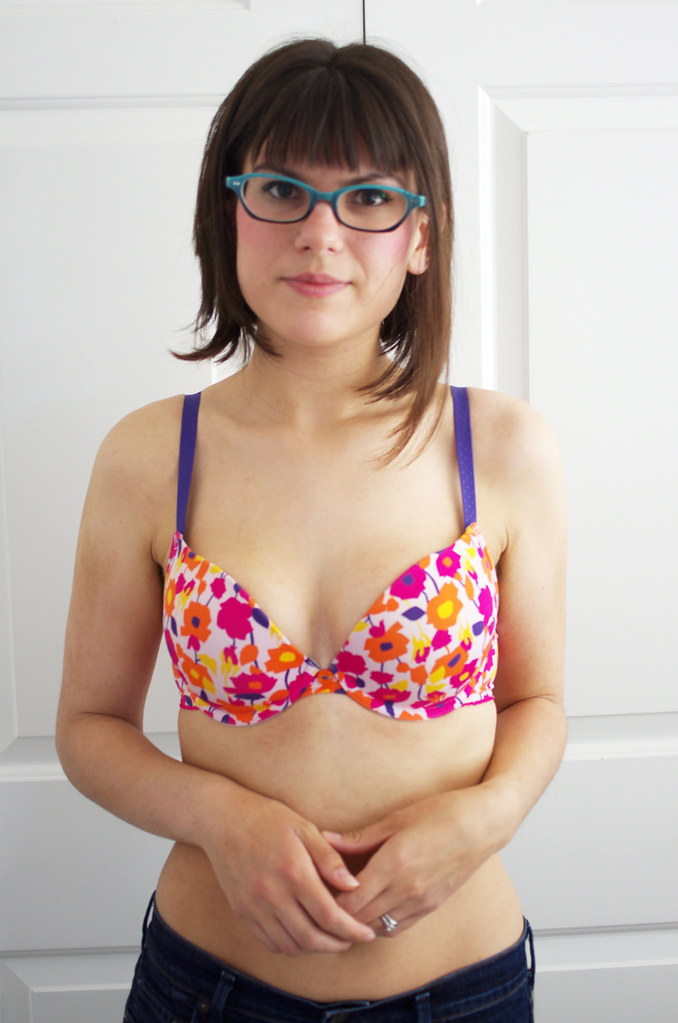
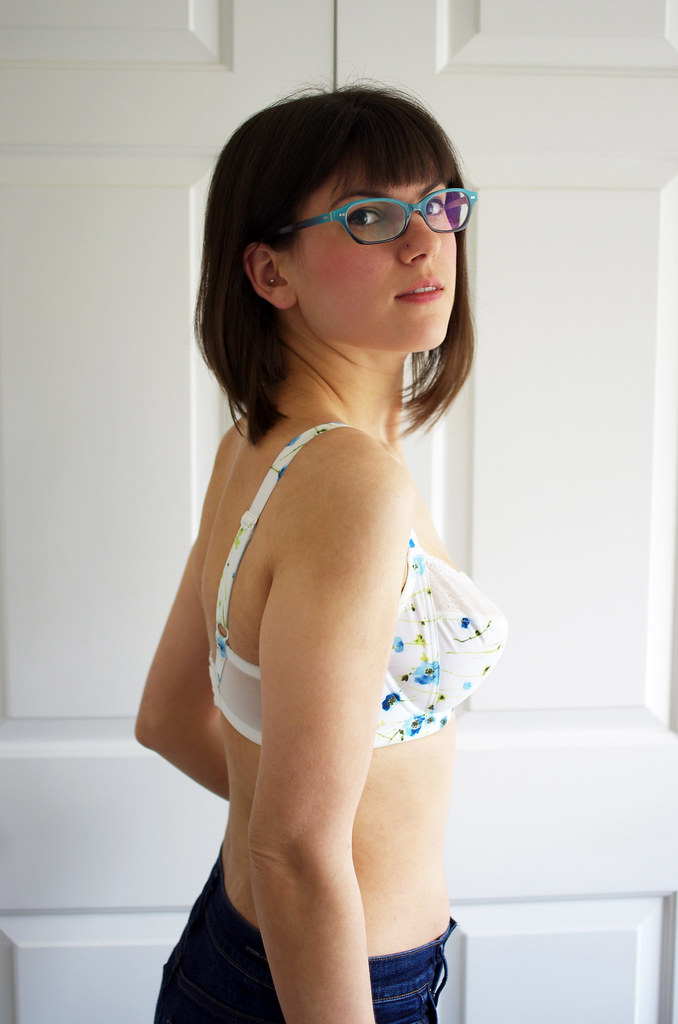
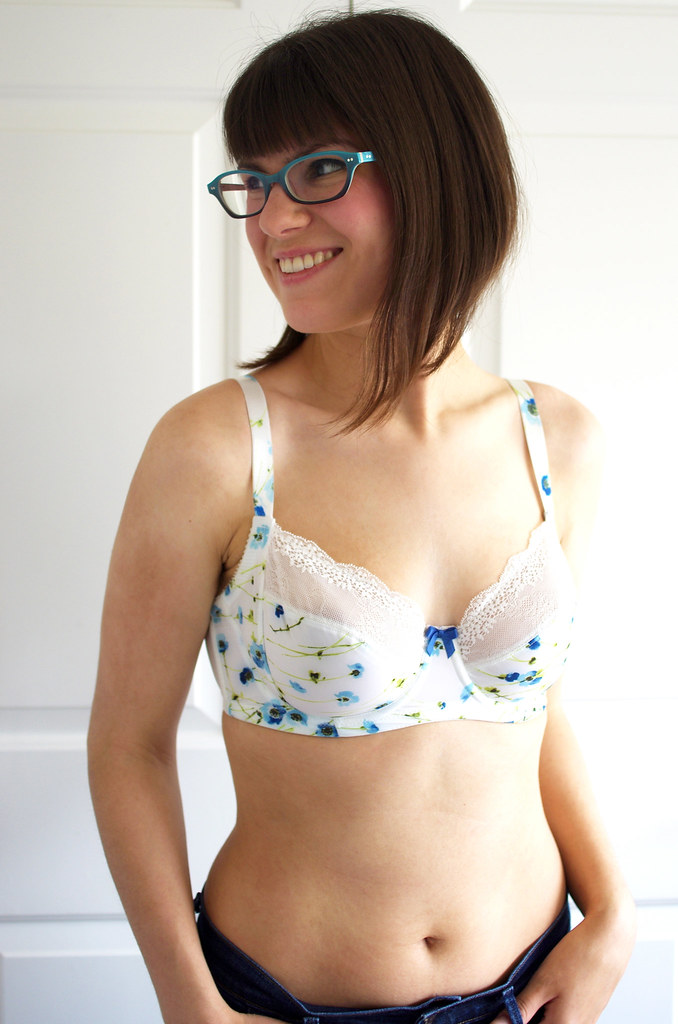
Parfait Louisa, 30DD - I love this bra. It has the perfect vintage-but-not-too-pointy shape for me.

But moving on! I want to talk a little bit about fitting, bras, and self-image.

As with so many other women, my relationship with bras and breasts is long and fraught with disappointment and frustration. I started developing when I was about ten, started getting catcalled by men in cars by the time I was thirteen, and by sixteen had a full-blown complex about my chest.

I got a lot of attention for them as a teenager - both wanted and unwanted - and with my limited options from Victoria's Secret, it just seemed like I was resigned to a life of quadboob, parents at school looking at me disapprovingly, and totally inappropriately-aged men telling me I was sexy. (Yikes.) I had friends who treated me like a bobblehead with boobs attached to it - which I eventually fixed by getting better friends - but being treated as weirdly sexual based solely on my appearance, by both strangers and people I cared about, was something I really struggled with. Not only that, my bras were always falling down, or spilling over, or unhooking on their own, which made me feel like one big walking billboard that said: LOOK AT MY BOOBS, GUYS!!!!!

And instead of thinking that my bras were wrong, I absorbed the idea that there was something seriously wrong with my body, and I accepted that I would never feel good in a bra.

Pausing for a second and looking back, all I can say is this:
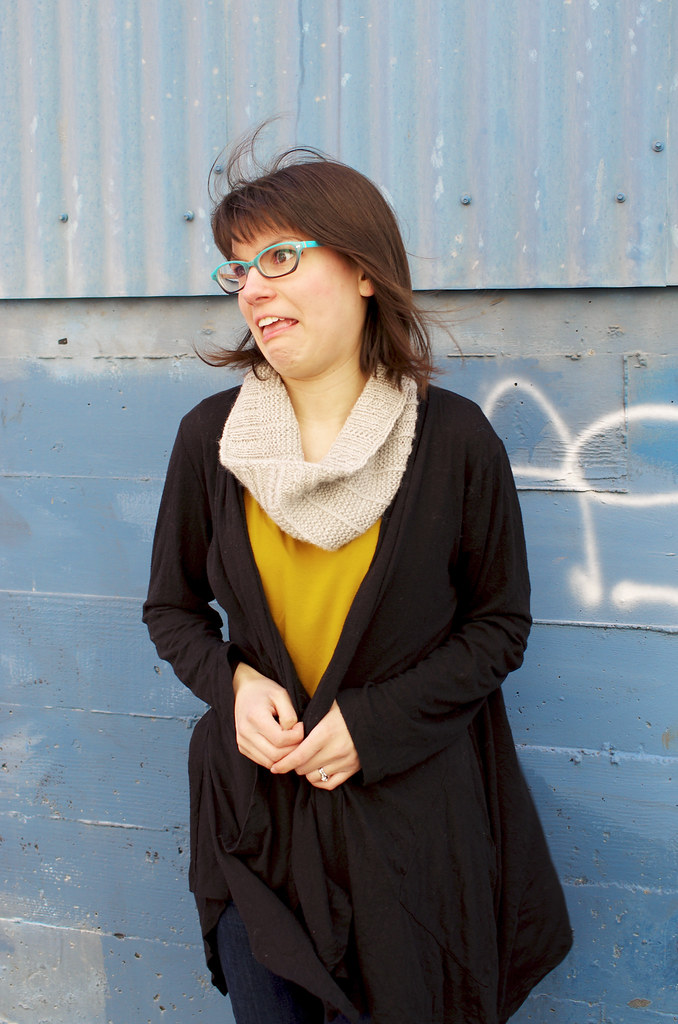
blech

Seriously. What the fuck.

Because now, I absolutely love bras. I love wearing them; I love that I can change the shape and style of my clothing by changing my bra; I love hanging out and sewing in just a bra and jeans because it's just so comfortable. I don't dread bouncing up the stairs, or running to catch a bus, or leaning over.

And it feels awesome to say, after all these years, that I really like my body. Like, holy shit, how long did that take? And all thanks to wearing bras that actually fit.

So how did I get there? Well, as a teenager and young adult, I wore everything from a 34B to a 38DD, and the bra size thing seemed like a total crapshoot to me, even through college. After over ten years of wearing the wrong size and dealing with constant pain and wardrobe malfunctions, I was at the end of my rope, but totally lost about what to do next. Then Lumberjack did a little research and found the magical universe that is the bra subreddit, r/abrathatfits, and gently suggested that I take a look. Blammo! My head exploded.

Here's a brief overview of what I learned.

Band Sizing is Way Simpler Than I Thought
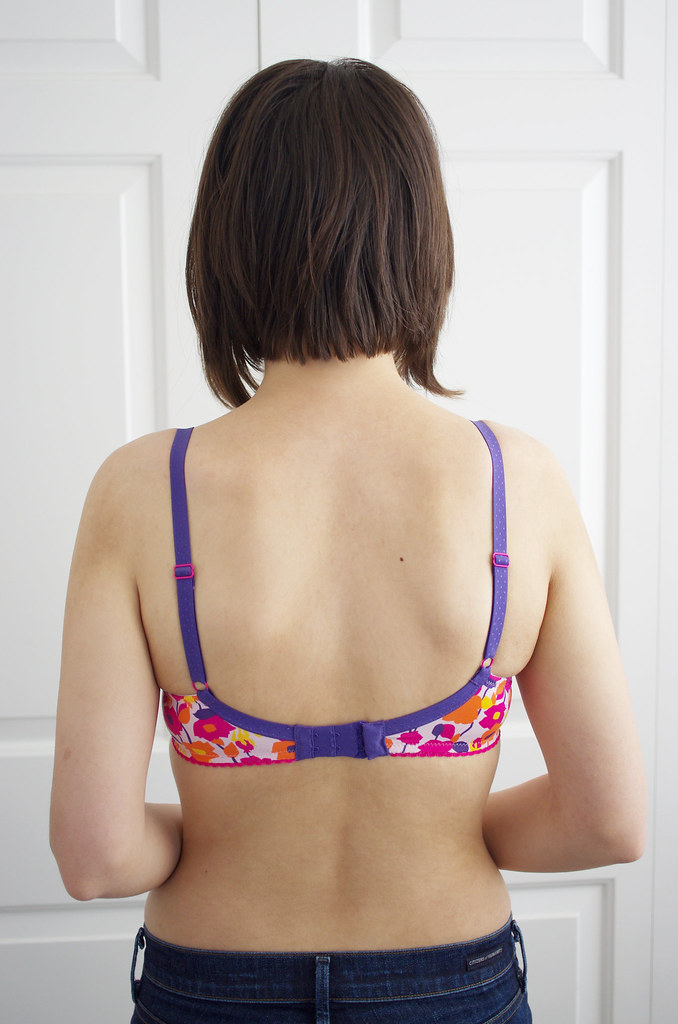
bra9

I found out that adding 4" to your underbust measurement is outdated and inaccurate for many women. Many women - including myself, for all those years - wear bras far too large in the band and far too small in the cup; the too-small cup with the large band makes the bra feel too tight, but it's actually not. Instead, a good starting point for your band size is your exact underbust measurement, rounded to the nearest even number. From there, you try things on, sizing up or down until you find a comfortable fit.

For me, the band feels like a firm hug around my ribcage and lies straight across my back. Most of the support comes from the band, and I can slip the straps off my shoulders completely and still feel supported. It took me a little while to get used to a tighter band, but I don't have indentations or raw spots on my shoulders anymore, and my boobs don't ache at the end of the day. For me, the tradeoff was well worth it.

For folks with disabilities, mobility issues, or chronic pain, a zero-ease band might not be the right choice, but again, it's all about trying things on!

Dear Victoria's Secret, DD is Not The Biggest Cup Size, Thanks
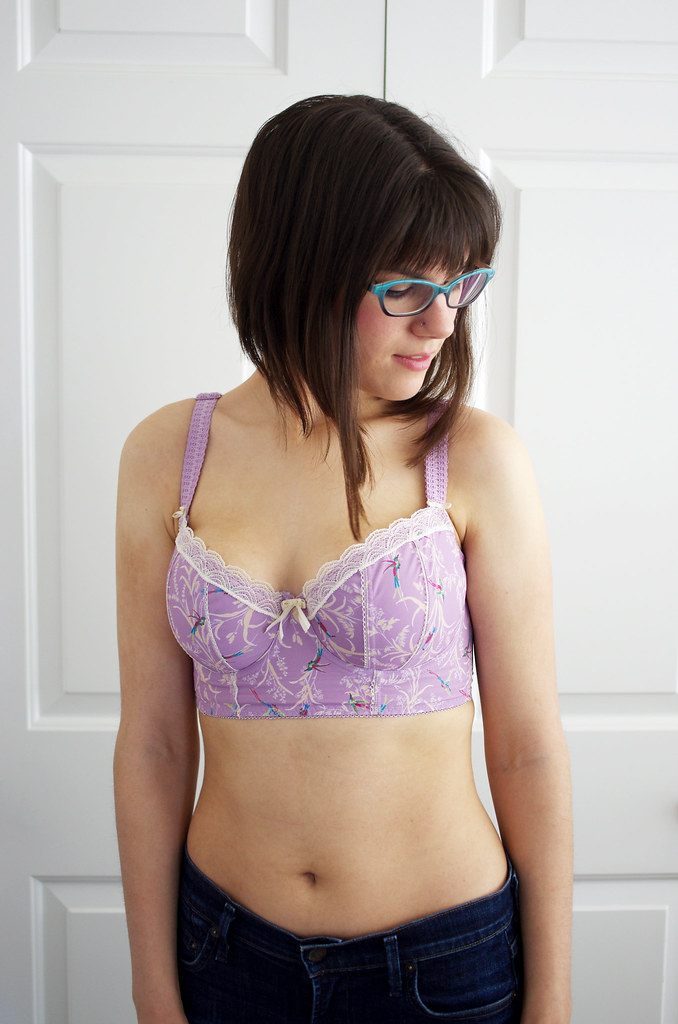
bra4 bra12

Freya Just Flew In Longline, 30F - please note that this bra is about a cup size too big for me now, so I'm wearing chicken cutlets to fill out the cups up top. I'm of the firm opinion that padding isn't "cheating", especially if it helps you get the shape and look you want. In my case, padding helps me continuing wearing a bra that no longer fits perfectly after my weight loss. Rules? Nah. I THROW IT ON THE GROOOOOUND.

To find your approximate cup size, measure your full bust measurement while standing and while leaning, average the two measurements, then subtract your underbust measurement from the result. Each inch of difference between your underbust and full bust measurement is about a cup size, starting from A = 1" and continuing from there.

This can be different between brands and in larger band sizes, and different countries have different sizing schemes as well. I've found that the UK sizing scheme works best for me, and doesn't include absolutely stupid cup size names like "DDDD". I tend to prefer UK brands like Freya, Fantasie, Curvy Kate, and Parfait to most US brands, but brand preference is, like so many things, a very personal decision!

It's also interesting to note that rather than fixed sizes, cup sizes are proportional; "D cups" mean nothing without a band size attached to them. They simply describe the volume of the cup relative to the size of the band: for example, although a 38D and a 28D are both considered "D cups", a 38D is actually a larger cup than the 28.

Shape, Fit, and the Myth of Armpit Fat
bra7 bra10

Cleo Neve Plunge, 30DD - Once you have the right size bra, scooping and swooping is important! Take a look at the improper fit on the left: the wires are lying too low on my chest, and as a result my tissue is pressed flat and doesn't fill out the cups. After scooping and swooping on the right - major difference! See how it looks like I don't have cleavage anymore? It's actually because my boobs are being supported correctly!

Different people have different shaped breasts, and different styles of bras fit and flatter those shapes. If a bra isn't flattering, even in the size that's supposed to fit, the style is probably not right for you. Your boobs are great, and your bra should fit them, not the other way around! Luckily, there is a wide variety of options: from molded bras, to seamed bras; from plunges to full-coverage bras.

It can be daunting to have to try on so many bras while you're learning your new size, especially when they aren't quite right, but rest assured that there's a style that will fit and flatter your individual shape.

I'd also like to note that a lot of what many people see as "armpit fat" is often actually migrated breast tissue pushed to the side by too-small cups - it took me several months of scooping and swooping everything into my new bras to feel like I had settled into my true shape. No migrated tissue in these parts anymore!

Of course, with all of this information, the key is personal preference, style, and comfort. Some women might not find this information works for them and that's okay! But I know that it changed my life, and I hope that being open about my own experience might nudge a few unhappy bra-wearers into the magical rabbit hole of bra fitting to find their own lingerie bliss.

-------------------

In other news, I'm starting my ballgown today! I hope that I'll be posting, but it might be a bit sporadic around here for bit. Thank you to everyone for your support and love in these last few months. I'm so, so excited to share my gown with you.

Love,
Cory

Monday, March 24, 2014

Outfit: That '70s Thrift

seventies seventies2seventies3 seventies4

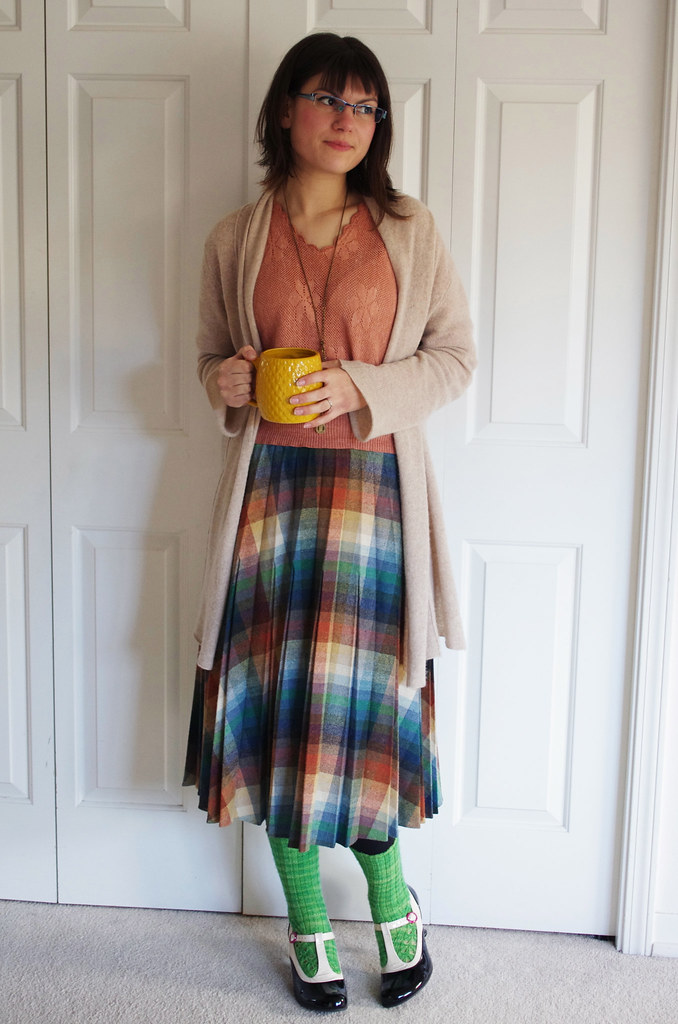
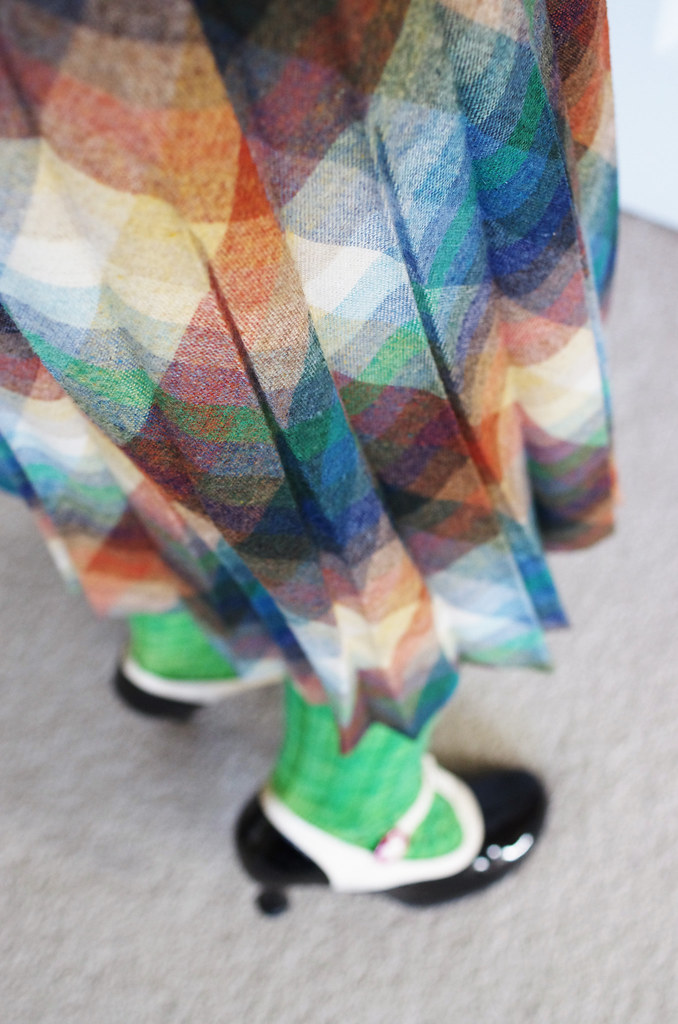
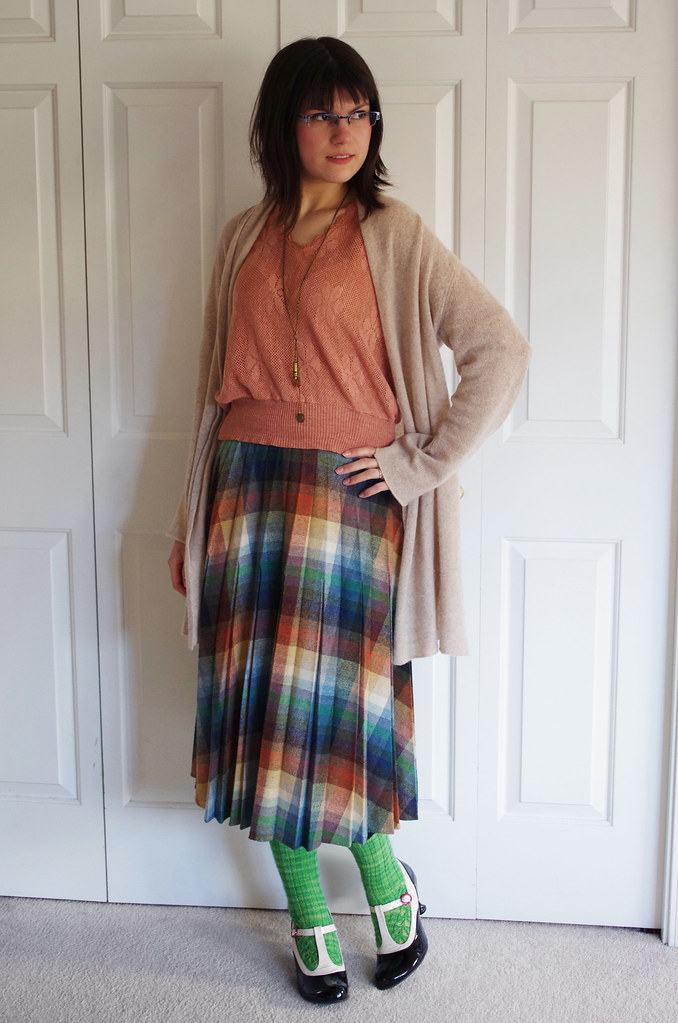
Last Friday I went on an epic thrifting outing with a friend, and came up with this layered, easy on-and-off outfit for the occasion. I always try to wear full-coverage leggings and a camisole while thrifting - for the times when there aren't any dressing rooms and you try on clothes willy-nilly in the aisles - so even though I looked a little more dressed up than usual it was actually the perfect thrifting ensemble! I also found out that this vintage skirt from the '70s goes with practically everything - it paired nicely with tons of colors, from fawn to deep turquoise. It's my first vintage skirt that fits my smaller waist, and I have a feeling that I'm going to get a lot of wear out of it.

For some reason, I've been finding myself really drawn to '70s silhouettes and colors. Something about prairie blouses, earth tones, and collegiate plaids have been really resonating with me lately - they make me think of crisp spring afternoons in Oberlin and pictures of my mom when she was a long-haired teenager. I think it's interesting how vintage clothing as objects are reflective of the sociopolitical context of the time, and something about the '70s aesthetic feels more positive and progressive than other vintage eras. There's a softness to it, but also a strength; Victorian-inspired crochet blouses are beautiful and feminine, but they're also a marked upgrade in comfort from the fitted styles of earlier decades.

I've been thinking a lot about it lately, because although I absolutely love fashion from the late '40s to the early '60s, I can't quite separate the beauty and craftsmanship of those garments from their more problematic aspects. Much of the New Look aesthetic feels deeply tied to the walking back of women's rights in the post-war era - the clothing, while beautiful, created and enforced physical restrictions on female identity and mobility, with full, unwieldy skirts that made movement more difficult; girdles to make the body smaller and more shapely; and cute, lacy aprons to normalize and beautify domesticity. Although I still love my mid-century vintage garments, I find that I have to mix them with contemporary clothing or vintage from other eras to enjoy them fully.

These two garments from the '70s, on the other hand, have an easiness and confidence to them that I really enjoy, to the point that I don't mind being era-matchy while wearing them. Plus they complement our giant owl coffee mugs nicely, which is pretty great (and pretty '70s) too!

Cardigan: Cynthia Rowley cashmere
Blouse: '70s, from Trove Vintage in Ballard
Necklace: Love Nail Tree
Skirt: '70s, also from Trove
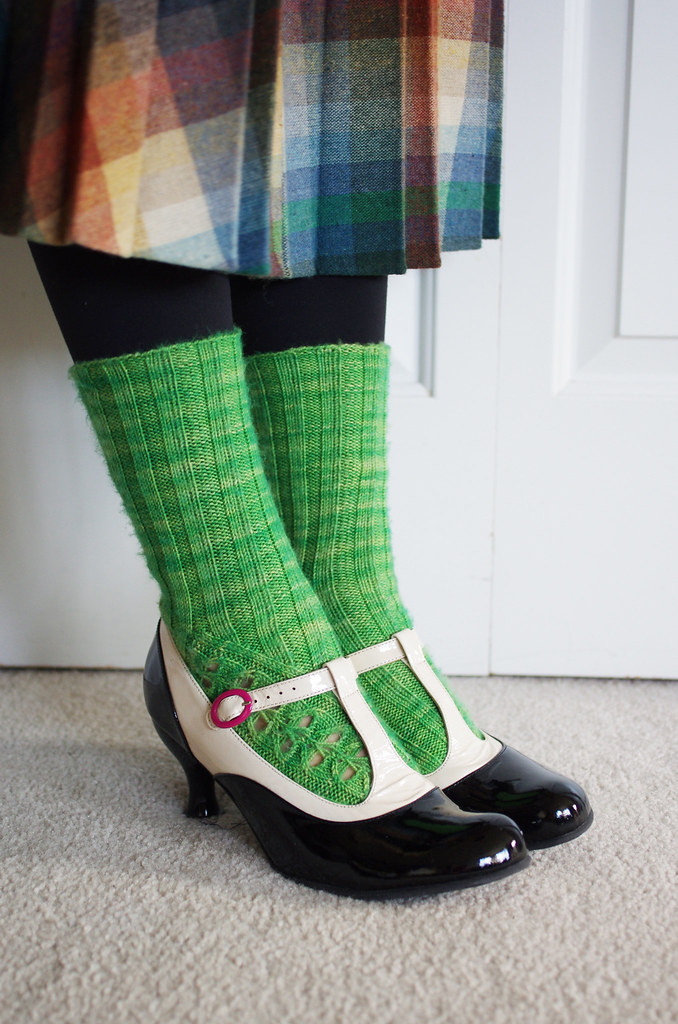
Socks: Kai Mei by Cookie A
Shoes: Fluevog Bellevue Laura Evans

Sunday, January 27, 2013

The Politics of Hemlines

Okay, so this is a difficult post to write.  And perhaps more than you wanted to know about me.  But I also feel compelled to talk about it, because it's been a long, long time coming.


Part I: A Picture

Recently, this photo by a flickr user named roseaposey went viral on Tumblr and the internet in general.  Understandably, this has some connections to the fashion and sewing community, as hemlines are both a practical and a stylistic concern.  It's started a conversation on these words: what they mean, who gives them meaning, who gets to use them, and who is hurt when these words are used against her.

It also strikes a major chord for me, because I'm always and forever an Oberlin student.

But more importantly, because I'm a survivor of sexual violence.

 I recognize the condescension and mock-concern in these words; the gross subtext that the length of your skirt says more about your sexuality than your words and actions do.

I recognize the slut-shaming words, because my best friend at the time used them to describe my experience to me, and thought that it was okay to do so.  I doubted my own feelings for years because of words like these.

I recognize the desire to believe that longer hemlines will protect you.  I changed to a simple wardrobe of slacks and different colored t-shirts for years after it happened, thinking that I could make myself invisible by changing what I wore.

I also recognize, almost seven years later, that a layer of fabric cannot protect you from someone who wants to hurt you.  That was a long and difficult lesson to learn, and ultimately not a very uplifting one.

In general, the older I get, the less okay the whole thing seems.

This picture says so many complicated things, and it makes people angry.  And maybe they should be angry, because it's absurd that these words are acceptable ways to talk about - or to - women.  They are not an okay way to pigeonhole women's experience, whether it's "slutty" or "proper".  Words on both sides of this spectrum are insulting, because they imply that sexuality is the only reason a woman would ever wear anything, and that sexuality is relegated to the young and stereotypically attractive, and that different levels of skin display are quantifiable levels of sexual availability.

All of this is bullshit, and I think the artist is doing a beautiful job of calling it out as such.

Women have different reasons for wearing what they do. Maybe she has a hormonal imbalance that makes her overheat in everything she wears, so she wears camisoles under her blazers.  Maybe she's a teenager and loves cut-off shorts because her unbearably cool older sister wears them.  Maybe she loves wearing historical clothes because she finds the story behind them fascinating.  Maybe her partner just died and she's wearing the dress she wore to their first anniversary.  Or, maybe she just feels comfortable and beautiful.

Any one of these reasons is reason enough.  No matter what a woman is wearing, she deserves not to be judged and shamed for it.


Part II: A Life, Complicated

I have very mixed feelings about writing about this.  But it's also hard not to talk about it, because the experience shaped my life profoundly.

My life pretty much fell apart when I was raped, and it was further complicated when the man who hurt me was murdered during a dispute between him and my former landlord.  I was 18 and naive, and that made me feel responsible - for both my own trauma and his death - for a long time.  He wasn't a great person, but he also deserved to live.  I struggled between compassion for him and hatred for a person who no longer existed.  Sometimes I still do.

When I think about my 18-year-old self, I just want to hug her and tell her that she'll be okay.  I want to tell her that other people's disbelief doesn't make her anger and despair any less real.  I want to tell her that this won't happen to other women.

But I can't.  And that will always be hard.

Since then, I've pulled my life back together.  I distanced myself from former friends who mocked my story rather than believing it.  I went to college and graduated.  I started making friends again.   I like to think that I've made a better life for myself than the one that fell apart.

But sometimes the weight of this story is too much.  It feels like I'm keeping a secret because I don't want to be shamed, when the real problem is that my survival is seen as shameful rather than strong.

In the end, I think that this is what the photographer was trying to critique: that in this society, silencing women with sexualized shame and judgment is as easy as using the right word to describe her hemline.  And this has to change.