Monday, October 7, 2013

FO: Wildflower Baktus

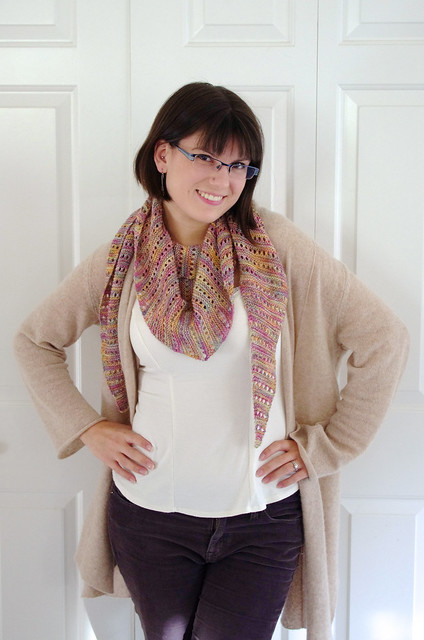
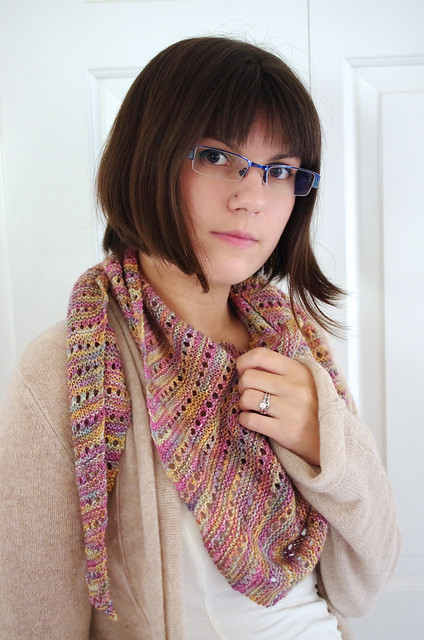
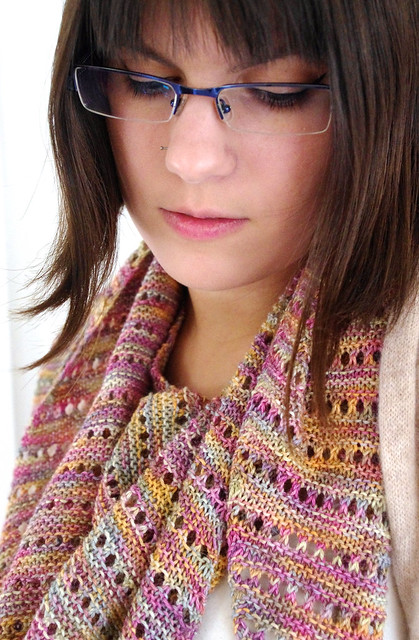
IMGP0019 IMGP9996IMGP0011 IMGP9976

Next up in the FO parade: my Wildflower Baktus, which has a slightly less disgraceful track record in the time-between-finishing-and-blocking category than some of my other projects.  I knit it in three or four days back in late June/early July, and then it sat for a while, but now it's done - and just in time for cooler weather!  I originally knit a Lacy Baktus out of Manos Serena for my local yarn shop back in Oberlin, and when I was visiting for my friend's wedding, I got enough to make one for me.  It's a relatively narrow, long shawl, and I love the shape - it gives enough length to wrap around your neck and stay on, with the wider portion of the shawl falling attractively right below the chin.

Semi-related - I've determined in the last few months that the clothes in my closet falls into two distinct categories: super adorable vintage, usually relatively fitted garments; and jeans and t-shirts for days when even the idea of pants seem like a chore.  The camisoles (I'm wearing one above) and jersey top I made for the show have filled some of the crossover void between the two, but I still need to work on finding or creating clothes that are comfortable but also fit my style.  I realized that although this scarf doesn't go super well with my current vintage wardrobe, it would go well with cute, simple-but-still-designed t-shirts.  So, given the amount of jersey in my fabric stash, maybe I should get on that!

Ravelry Page:  Wildflower Baktus
Pattern:  Lacy Baktus by Terhi Montonen
Yarn: Manos del Uruguay Serena, colorway Wildflowers, 2 skeins
Yardage: ~340 yards
Needles: Size 4 US Addi Turbo Lace

Friday, October 4, 2013

Things I Love: Non-Shawl Patterns for Laceweight

So anyone who knows me in a yarny context also knows that I have a teeny obsession with laceweight yarn.  I love working with skinny yarn, and I love the lightweight fabric that it produces.  Also, as a person with a large chest and smaller waist, lightweight fabrics are usually the most flattering for me to wear.  So why haven't I knit more garments with laceweight?

Short answer: I'm lazy.  Long answer: I have lots of ideas, but haven't actually put them into action yet.  (See: I'm lazy.)

So here's a few of my favorite non-shawl laceweight patterns paired with potential yarns.

Blouses

IMG_1391

Pattern: Celandine by Jennie Pakula, from Twist Collective.

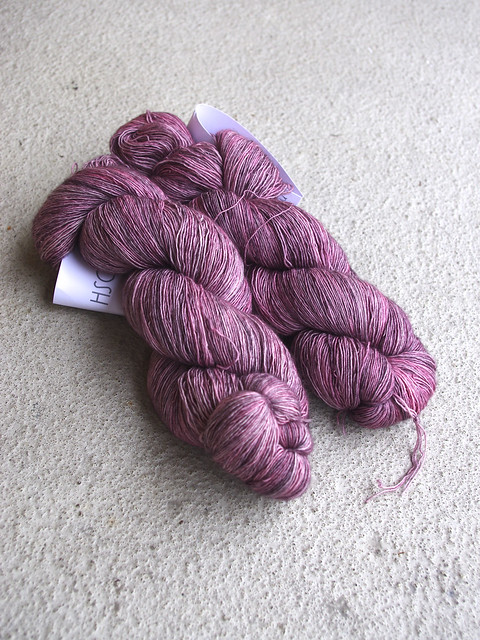
Yarn:  Madelinetosh Pure Silk Lace, colorway Mulled Wine.

Notes:  I love the delicate, '30s vintage feel of this blouse.  It would be a little fiddly to make, and I might grade out to a larger size through the lower body so I can have negative ease in the bust but still keep that lovely hip-skimming silhouette, but I think this would be a great layering piece and a gorgeous addition to my wardrobe.

IMG_1262

Pattern: Plotted & Pieced Blouse by Caroline Fryar, from Juniper Moon Farm (also available in print in the Juniper Moon Farm Findley Dappled Booklet from 2012).

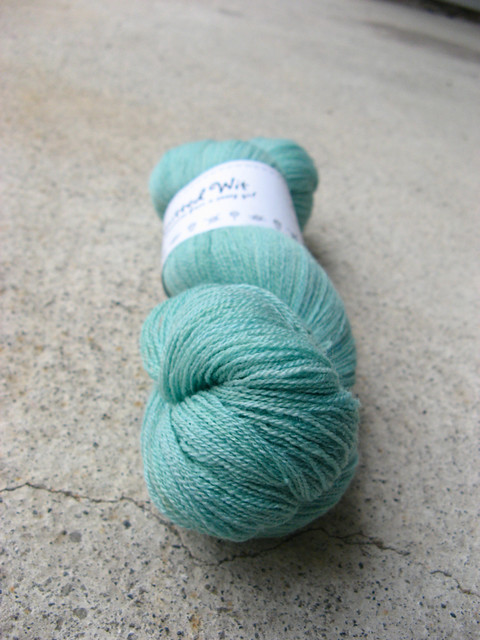
Yarn: Knitted Wit Shimmer, colorway Peacock.

Notes:  I've been obsessed with this pattern ever since it came out a few years ago - I love nupps, and I love laceweight, and I think this blouse would be gorgeous executed in a color or in soft white!  I can see it going really well with full skirts, which I wear a lot all year.

Cardigans

IMGP6441

Pattern: Swoon by Juju Vail and Susan Cropper, from Juju's Loops.

Yarn: Madelinetosh Prairie, colorway Night Bloom.

Notes:  Not-quite-a-shawl, not-quite-a-cardigan, and the perfect use of a soft, slightly glossy single-ply laceweight like Prairie.  This pattern is only offered in one size, but I think with the drape of the fabric and intended ease of the garment, it would flatter a variety of sizes and body types.  I think this would be a great way to dress up a t-shirt and jeans, or to throw over a sundress on a chilly evening.


IMG_1366

Pattern: Laar by Gudrun Johnston, from The Shetland Trader (also available in print in the Shetland Trader - Book 1).

Yarn: Madelinetosh Tosh Lace, colorway Thunderstorm.

Notes:  I think this one would work best as a light layer over a camisole or short-sleeved shirt - it almost functions as a blouse on its own.  I like the simplicity of the body and sleeves, with just a little bit of interest in the picots and lace yoke detail.


IMGP0628

Pattern: Hethe by Judy Furlong, from Fyberspates Scrumptious Collection, Volume 1.

Yarn: Tactile Fiber Arts Studio Arcata Lace, colorway Concord Grape.

Notes:  This pattern has been in my queue for a while now.  I love the romantic look of this cardigan - it feels very Edwardian to me.  Plus, it has nupps!  And it's shown in pink!!  So of course I love it.  As with the other cardigans in this section, this one would be less for warmth as an outer layer, but I do think that it would do well layered with a dress and light jacket.

Socks

IMG_1631

Pattern:  Darrow Socks by Corrina Ferguson, from Juniper Moon Farm Findley Dappled Booklet 2013.

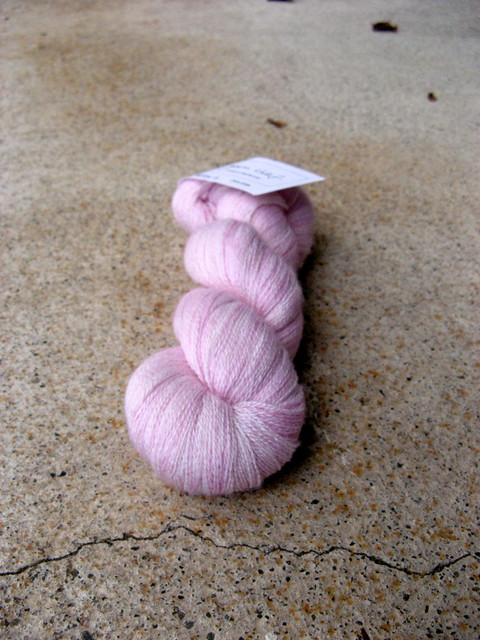
Yarn: Yarn Chef Crème Brûlée Lace, colorway Raspberry Ice

Notes:  I'm intrigued by the idea of making super fussy, gorgeous socks out of laceweight yarn.  I don't know how well they would hold up, but I do know that they would be the most beautiful socks ever for as long as they lived.  (And then I'd have to make more.)  Paired with a cream blouse, navy Pendleton pleated skirt, and mary janes, I can see these socks kicking pretty ass.

(As a side note, if you're interested in more laceweight garments, Juniper Moon Farm has quite a few more pretties in their Findley line of booklets!)

*********

And there you have it!  I might have to go swatch for my next 5 billion laceweight projects now.  Geez.

Happy Friday!

Wednesday, October 2, 2013

Yarn Love: Wedding Handspun

Warning: Wedding talk ahoy! If weddings aren't your jam, feel free to stop here!

IMGP9595

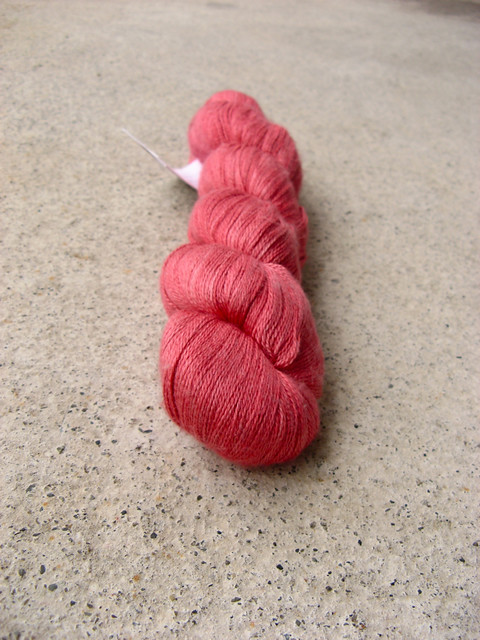
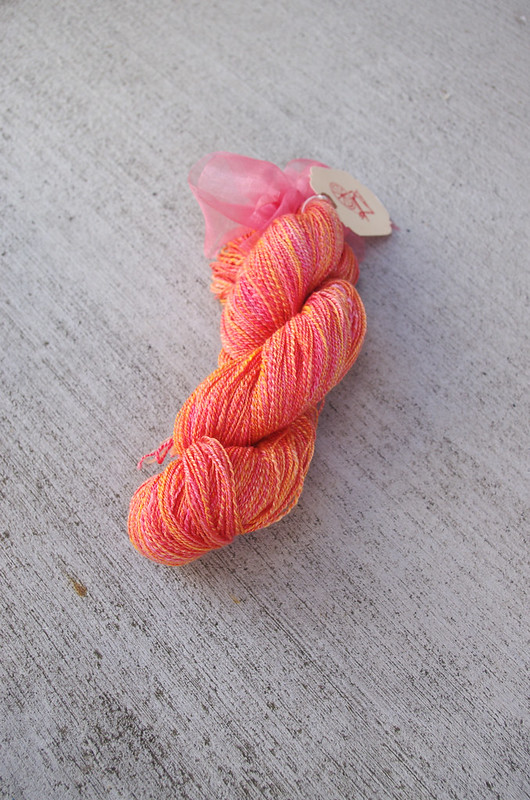
Having just received our gorgeous wedding photos - which I'll do a post about soon - I was inspired to write a little bit about this handspun I received as a gift from our friend Jennifer, who also made the handspun ring pillow.  It's a 2-ply, 50/50 merino/tencel laceweight in the most beautiful coral color, which also matched one of the colors in my dress and my bridal party's dresses and ties.  I see handspun laceweight so rarely, much less handspun laceweight made especially for me by a friend to celebrate a special occasion, so this is a very special gift!

It hasn't decided yet what it wants to be, but I know it will become an heirloom of some sort - a shawl or scarf, most likely.  Evelyn Clark patterns seem particularly suited to showing off unique yarns, so I might look through her library.  I've actually been thinking of knitting another Swallowtail Shawl out of this - here's my others, Swallowtail 1 & Swallowtail 2, which I loved knitting and wear often - so that pattern is a strong contender.

Whatever it becomes, it will always remind me of Jennifer, the time we spent with friends the week before I graduated from Oberlin, and the wedding.  A lot of great memories and love wrapped up in one very pretty skein of yarn.

Thank you, Jennifer!

Monday, September 30, 2013

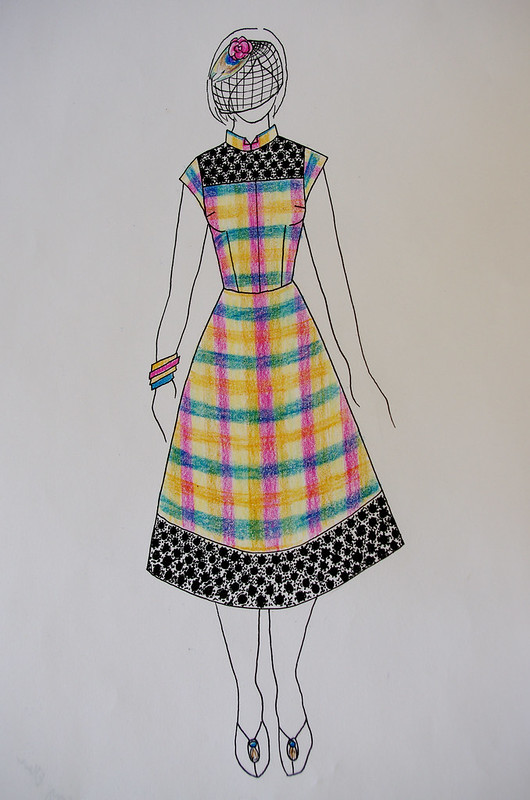
Fashion Illustration: Vintage-Inspired Plaid Dress #1

One of the projects I have left to do for my certificate program is to design and illustrate four garments to go in my Line & Proportion notebook.  Each garment has to be the same type - for example, all pantsuits, or ballgowns, or cocktail dresses.  Since I'm stuck on plaid and love vintage clothing, I decided to do little vintage-inspired plaid dresses for all of my garments.

Each drawing must be shown on a different body type*:

Rectangle:  Medium to broad shoulders, small to medium bust, medium waist, medium hip.
Triangle: Narrow shoulders, medium to small bust, small waist, full hip.
Inverted Triangle: Broad to medium shoulders, large bust, medium to large waist, narrow hip.
Hourglass: Medium shoulders, full bust, small waist, full hip.

  Lastly, each drawing should be an example of a stylistic genre**.  The four genres we were assigned, and some common design characteristics:

Exotic - jewel tones, animal prints, mixed prints
Romantic - soft colors, florals, flowy fabrics
Town & Country - neutrals, equestrian-inspired, preppy
Classic - solid colors, simple prints, very simple designs


For my first dress, I was designing for a Triangle figure type in the Exotic style.  I sketched the dress a few weeks ago and loved the idea of doing a bright plaid taffeta with black guipure lace accents, with a shape inspired by the all the fabulous cheongsams worn by Maggie Cheung in In The Mood For Love.  It was definitely interesting to think about how to design something that is inspired by another culture, but keep it from being too literal or appropriative.  I was very happy with the design I came up with; I think it echoes the inspiration without copying it wholesale.

IMGP9945 IMGP9940IMGP9943 IMGP9950

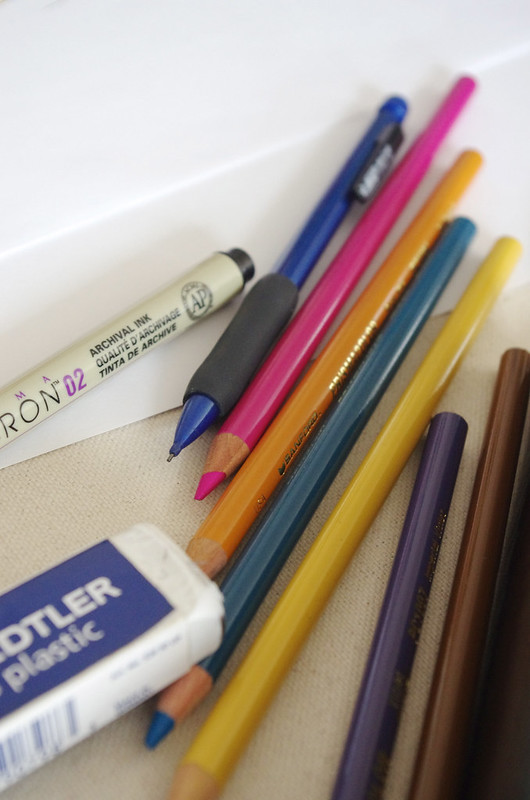
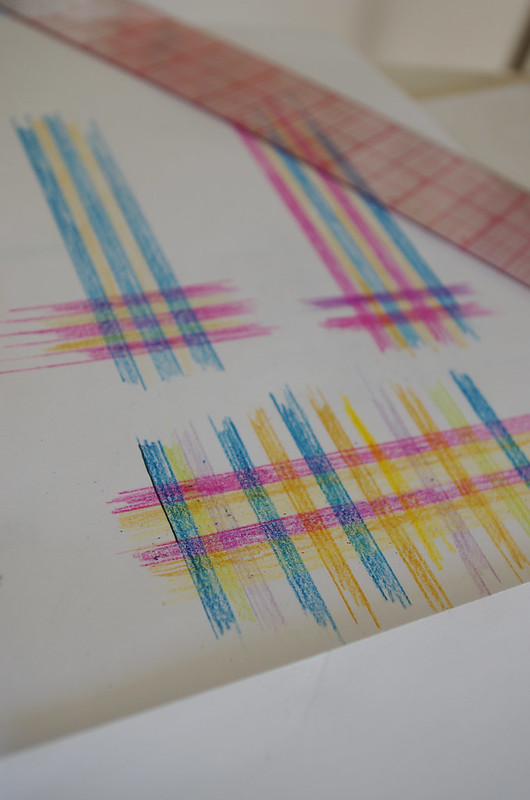
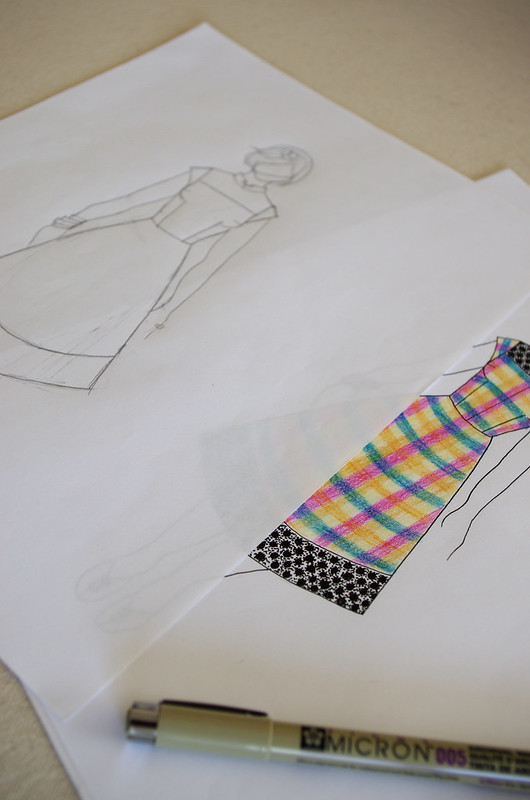
  This afternoon, I grabbed my pens and Prismacolor colored pencils, traced the pencil sketch onto another piece of paper, and inked the outline.  I had to spend an hour or so developing the plaid pattern, since I didn't have a fabric sample to work from.  I think the only thing I didn't quite capture is the texture of the fabric - crisp and rich, with a soft glow.  Then I had to think about the construction of the dress and how it would affect the plaid and seam matching.  (I've been thinking a lot about seam-matching lately, because of the plaid love affair!)

The lace was really fun to ink, but took forever, so I listened to Starjay Knits and drew zillions of circles with dots around them for a few hours!  Now my hand hurts, but I'm a quarter done with the assignment, and almost caught up the podcast.  Hooray!

*These are general guidelines - most people, including myself, are a combination of these.  For this exercise, we're supposed to design to flatter each body type using the guidelines we learned in the class.  I have some differing opinions on the subject, but I also think it's interesting and constructive to learn the "rules".

**Again, I have my own thoughts about these genres, particularly Exotic, which can be a very problematic word because of the frequent sexualization and commodification of marginalized cultures.